Our girl
Reading Virginia Giuffre's memoir on the one-year anniversary of her death.

✉️ To my readers: I’ve been working on a long-form, researched piece reviewing the film The Drama, but between my dissertation and upcoming event, it’s been taking me longer to produce. It’s on its way! This is just a very busy time for me in the academic year.
✦ SAVE THE DATE ✦

THURSDAY, APRIL 30TH, 1 PM EST, 7 PM Paris/CET
✦ “What Do the Epstein Files, The Handmaid’s Tale, and the Crisis in Afghanistan Have in Common?”
✦ Hosted by Voices Unveiled
Next week I’ll be on a panel discussing the state of women’s rights worldwide. This is a free event live streamed on Instagram by a remarkable organization providing education to women in Afghanistan, who live under the tyranny of Taliban rule. I’ve been researching for weeks for this event, and will be speaking about how women tell their stories under gender apartheid. What does it mean to be the narrator of one’s own experience of survival and resistance? What is the power of using one’s voice as a woman writer, and what do these stories call us to do? Can these stories move us towards envisioning a global feminist liberation movement?
I’m looking forward to the discussion following the panel, and hope you’ll join us!
🏴 Content warning:
This piece references sexual violence and suicide.
It’s a sunny afternoon in Paris, and this day a year ago Virginia Giuffre passed away, only 41 years old. I finished her memoir, Nobody’s Girl, today as I was preparing for a talk on gender apartheid and how women survivors and fighters tell their stories. Virginia, or “Jenna” as she was called, had been fighting her whole life, long before she was trafficked by Epstein. By middle school, she had already been through so much abuse.
The legacy of trauma can be hard to reckon with. The first man who pimped out this remarkable woman wasn’t a billionaire, but her father, using the elementary school-aged Jenna for his own pleasure before lending her to a friend. Evidence points to him having accepted money, later, from Epstein. Like many women survivors, Jenna tried using her voice. No one listened. And again and again, she found herself in a cycle of capture, rape, and using drugs to cope with her trauma and stress. The supposed rehab center her parents enrolled her in was cult-like and almost as horrifying as any mansion or island owned by Epstein. If that center had been a prison—and it often operated like one—it would be on human rights watch lists.
This is a sobering post to share on such a lovely day in April. I share it because I, too, have been reckoning with the monsters that have been dragged out from under the bed, made visible because of the determined courage of women like Jenna. As the illusions of safety and justice that many in West believed in begins to collapse, I feel fear and grief, but also a twinge of relief not uncommon to those suffering on the margins. With every revelation, my past and present self feels less gaslit, feels less suffocated by the long-held cultural and societal belief that a world run by patriarchal men is actually not that bad.
We can finally talk about the dangers women have been taught to ignore. In doing so, we can confront them, and we can begin to change the world.
I haven’t suffered half of what Jenna did, but while I read her harrowing account, I had so many flashbacks to moments in my childhood and teens when my intuition told me that the people around me weren’t safe. When I couldn’t verbalize why, I had cautionary dreams about these people, mostly the men. Sometimes these dreams were my wisdom’s way of breaking through the noise to tell me I was already being harmed, even if the adults told me I was doing great. Of course, I did try expressing myself, and was met with dismissal or blank stares. What do you mean? It’s fine. As I grew older, the voice of my intuition was worn down. I was tired of being the nerdy, anxious, boring one, so I let others override my wisdom. That’s when a sense of self-betrayal collided with pain of being harmed by others. It took me years to undo the conditioned intellectualizing that taught me to suppress my knowing.
Now, I believe my gut the first time. When “someone shows you who they are, believe them the first time,” Maya Angelou says, and I would like to add that “when your intuition speaks, believe it the first time.”
Women have been indoctrinated into ignoring their intuition because it upholds systems that allow patriarchal men to use the world as their playpen. It’s so much easier to maintain the status quo than prompt a revolution and become the target of the sacrifices we see other women make. As a result, women are sadly complicit in supporting the patriarchy—Jenna’s memoir points that out over and over. There were many women involved in Jenna’s abuse, whether it was by looking the other way or directly conspiring in its execution, as Ghislaine Maxwell did. Jenna herself, while captive to Epstein, was sent to scout out minors for the predator. He terrorized her with the extent of his power, showed her a photo of her baby brother to indicate the lengths he’d go to if she began disobeying.
That’s the most painful thing about such stories. They turn victims into perpetrators to keep them silent, miserable, and enrolled in the program. If you believe you’re a villain too, why would you tear down the castle?
At some point, women forget where they end and patriarchy begins. As a writer, I want to pick apart that story, thread by thread. We can always belong to ourselves again. Somehow, my intuition tells me that world is possible.

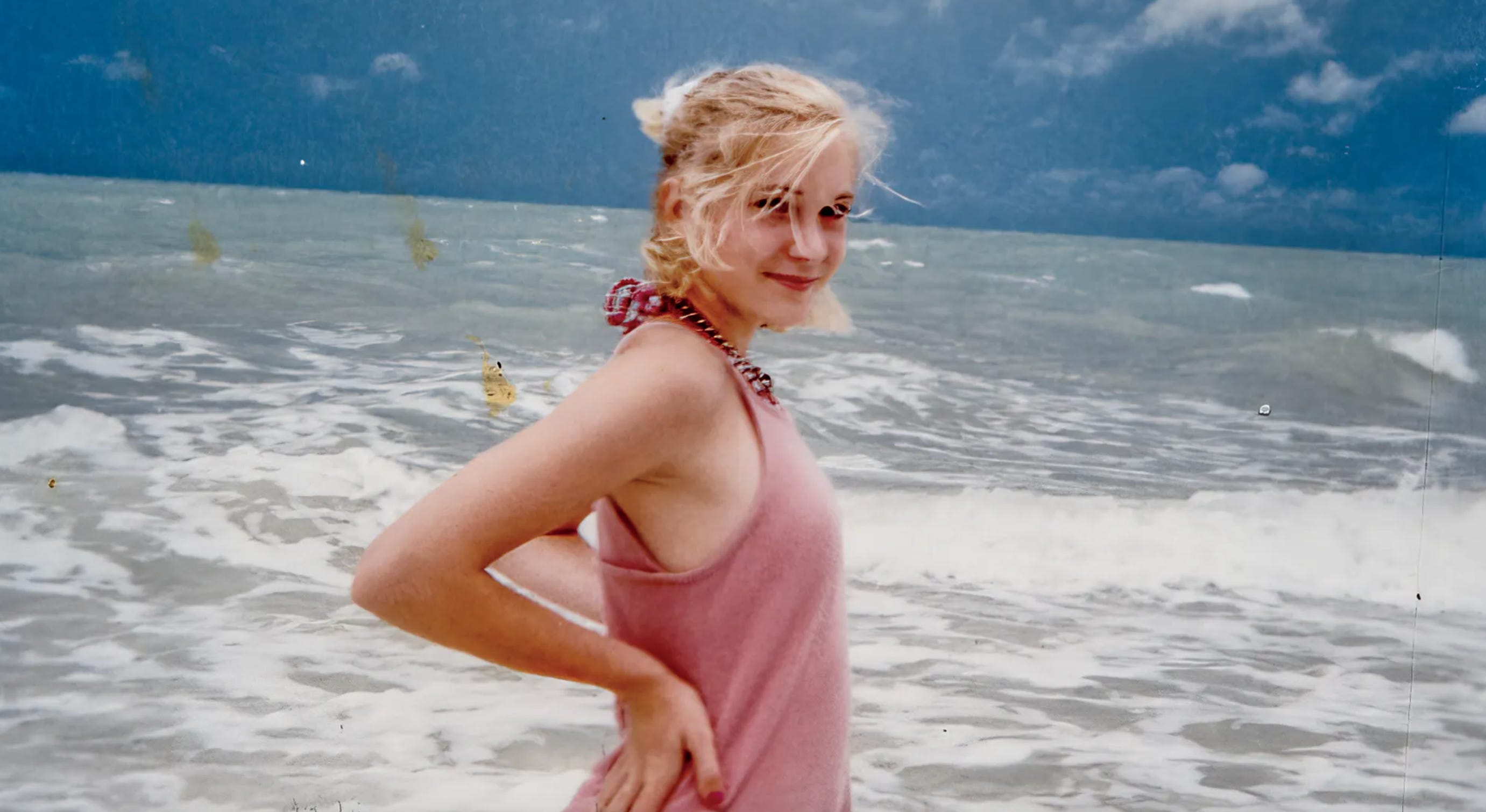
I don’t know whether Virginia Roberts Giuffre really did take her life last year or not, but the fact that she is gone is a plague on our house. Survivors are often our fiercest defenders, but many are left to hold the world together until they are defeated or crumble.
Ever since she’d decided to break her silence and join the other accusers of Epstein, Jenna and her family were besieged by threats, paparazzi at their home, cruel attacks by the media, and even a reported attempt on Jenna’s life. People wanted her shut up and they wanted her dead. The family moved constantly. This woman needed healing, love, and safety, but chose to stand up for others anyway, exposing herself to monsters and the unkindness of strangers.
Eventually, even as those involved were brought to justice, Jenna became mired in a series of injuries, chronic illnesses, and pain. The years of litigation and reliving her trauma through testimony, over and over, was taking its toll.
The vehicle accident that sent her to the hospital, after which she is said to have taken her own life, is strangely reminiscent of the many other “accidents” and “suicides” that pepper this case. While Jenna relates in Nobody’s Girl that she struggled with suicidal thoughts during her many illnesses, she also underscored her insistence on continuing the fight. The collision also recalls the suspicious way the British Royal Family was relieved of another outspoken woman who came too close to shattering their illusion of nobility. Like Princess Diana, Jenna soldiered on, took aim at the Royals, and seemed to have found a new start when a traffic incident put all that to an end.
If she was assassinated, she needed better protection. If she chose to end her life, she needed more care and support. Either way, the world failed Jenna, even when she refused to fail us.
I am tired of martyrs. I am tired of hearing stories of women who fought for us only to watch them die in their prime. I want stories of women who take down Goliaths and live to a happy, wise old age, enjoying the sunlight on their skin and the sound of happy children who live freer, safer lives. But such stories will not be possible if these women fight alone or in small teams of survivors, their lawyers, a therapist, and whatever healthy family members remain. That’s a start. It’s not enough.
The stories I want only begin to be possible when women fight as a collective, and care for each other as a collective.
How much care is needed? Whatever it would’ve taken to keep Jenna alive, hopeful, and knowing that greater safety, love, and happiness was indeed on the way. We do not yet live in a world that routinely has a capacity for this sort of care. I think we can cultivate it once we realize that doing so is the golden thread that guides us out of this Minotaur’s labyrinth of death.
There is so much to learn from this heart-rending story—and others like it—before justice can truly be served. In the U.S. and around the world, patriarchy takes different forms, but it operates in surprisingly similar ways. It relies on others’ belief in the superpower and entitlement of quite ordinary human men. When I was a little girl, and saw such men in my world, I too believed they were the gods they said they were. Only now that I am grown do I recognize how fragile they were, what a troupe they had to assemble to trick others into playing along in their theater of power.
I understand why, from Epstein to Dominique Pelicot to the many men participating in the online “rape academy,” the underlying message is, as Kate Manne suggests: Don’t look. Don’t witness. Don’t even see. The illusion was always fragile, a toddler’s insistence that we play into their fantasy.
This is why my profile image on Substack is an eye. I wasn’t sure why I chose it at the time, putting together the design in Canva. It spoke to me and the writing I aim to produce, and now I know why.
I’m watching you. I understand what I see, and I’m not fooled.
Big Brother and creepy men with smart glasses aren’t the only ones with eyes. And I don’t need a high-tech lens to see through them. The source of my knowing is ancient, it comes from the wisdom passed down to me from women who lived long before patriarchy existed, and who will flourish after it becomes a parable in our history books, a spooky story of that strange, dark time when women and the earth were exploited for gifts that fall so readily into a kind and gentle hand.
My hope is that the recent revelations of violence, and the sacrifices of women like Jenna, are the start of a global feminist liberation movement. That is what reading Giuffre’s memoir, dystopias about terrorism on the reproductive body (lately, by Margaret Atwood, who is Canadian, and Louise Erdrich, who is Ojibwe), and speaking to women writers, artists, and journalists from around the world has motivated me to pursue.
None of us are free until all of us are free. Until the notion of us being less than human is put to rest.
So, I wonder:
What might it look like if we don’t have to be heroes alone?
There are also cracks and openings for the undoing of power in the smallest, most quotidian of places. Think of the endless network of creatures in the ecosystem, all reliant on each other, that allow just one apple to arrive on your kitchen counter, full of nutrients, to nourish you. Just one collective within that chain could make life impossible for you in the blink of an eye, whether with its absence or a change in behavior. And the Goliaths of the world rely on even greater complexity to support their elaborate lifestyles.
Total power and control isn’t natural. Nature is ever-changing, it is a melange of beautiful figures and brilliant variations, it is flow, it is grey areas and mystery. Those who seek domination are constantly rowing against that current. It is, in fact, an exhausting enterprise, always on the very brink of collapse.
What ecosystems do we influence with our small and mighty powers?
What might it look like if we stop playing somebody else’s game?